
Is Moving to Billings, Montana Worth It? Merlin Lipin’s Pros and Cons of Living Here
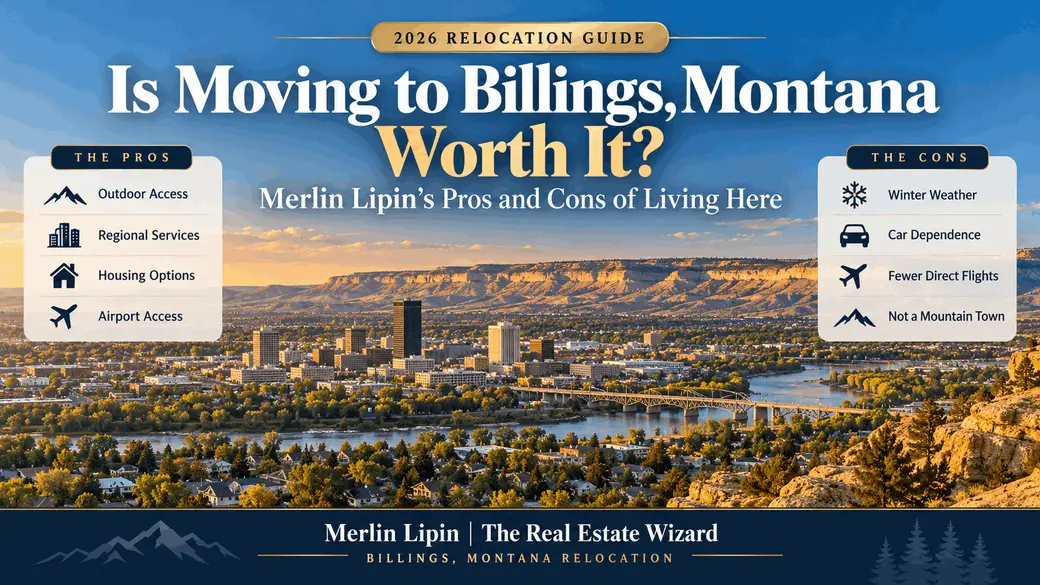
Is Moving to Billings, Montana Worth It? Merlin Lipin’s Pros and Cons of Living Here
Is moving to Billings, Montana worth it?
For many people, yes. Billings can be worth the move if you want access to Montana’s outdoor lifestyle, relatively manageable housing costs, short drives around town, major regional services, and a city that still feels smaller than a major metro. But the tradeoffs include unpredictable weather, car dependence, fewer direct flights, and the fact that Billings is a regional city—not a mountain resort town.
Whether a relocation to Billings makes sense for you ultimately depends on what you want your everyday life to look like.
Here are the real pros and cons to consider in 2026.
Pro: Billings Gives You a Lot of City Without Feeling Like a Huge City
Billings is Montana’s largest city, with an estimated population of 121,239 as of July 2025, according to the U.S. Census Bureau. The city has grown about 3.5% from its 2020 population base.
That gives you access to services you may not find in many smaller Montana communities.
You have:
-
Major healthcare systems
-
Billings Logan International Airport
-
Restaurants and breweries
-
Shopping and retail
-
Colleges
-
Downtown entertainment
-
MetraPark
-
ZooMontana
-
Golf courses
-
Regional employment
-
Parks and trails
At the same time, Billings does not operate on the scale of Denver, Seattle, Phoenix, or Minneapolis.
For many people relocating here, that balance is a major advantage.
You can have access to city services without building your entire day around traffic and long commutes.
Con: Billings Is Still Pretty Car-Dependent
One of the compromises is transportation.
Billings has public bus service through MET Transit, but a vehicle makes life significantly easier for most residents.
That is especially true if you:
-
Work outside the central part of town
-
Live on the West End or in the Heights
-
Frequently travel outside Billings
-
Ski, hike, hunt, fish, or camp
-
Have children with multiple activities
-
Need flexibility outside transit hours
The upside is that driving around Billings is usually manageable compared with a major metropolitan area.
The downside is that if your ideal lifestyle involves walking, trains, extensive public transportation, or living completely car-free, Billings may frustrate you.
Pro: Housing Is Still Relatively Affordable by Montana Standards
Billings is not an inexpensive housing market in absolute terms.
But compared with Montana overall, it can offer meaningful value.
Redfin reported a median Billings sale price of approximately $392,313 for the three months ending September 2026, up about 0.9% from the same period the previous year. Homes took a median of approximately 63 days to sell.
That matters because the Billings market gives you a broad range of housing choices.
Depending on your budget, you may find:
-
Established single-family homes
-
Townhomes
-
Condos
-
New construction
-
Larger West End properties
-
Homes with shops
-
Investment properties
-
Acreage outside city limits
-
Luxury homes
Billings also currently has an overall cost of living estimated at about 3.1% below the national average, with housing costs approximately 8.4% below the national average.
That does not make every house affordable.
But it can make Billings an attractive option for someone who wants Montana without paying the housing costs found in some of the state's most expensive markets.
Con: Billings Is Not as Cheap as Some People Expect Montana to Be
This catches relocating buyers off guard.
You might picture Montana and assume you can buy a large house, several acres, a shop, and mountain views for a bargain.
That is not necessarily realistic.
A median home price around $392,000 is still a significant purchase.
And properties with acreage, newer construction, large shops, premium locations, extensive updates, or additional amenities can cost considerably more.
If you are moving from a very expensive coastal or metropolitan housing market, Billings may feel affordable.
If you are relocating from rural Kansas, Nebraska, North Dakota, or another lower-cost market, Billings may feel expensive.
Affordability is relative to your income and where you are coming from.
Pro: The Current Housing Market Gives Buyers More Time to Think
This is one area where 2026 looks different from the frantic housing markets many buyers remember from earlier in the decade.
Redfin currently characterizes the Billings market as not very competitive.
For the three months ending September 2026, the median sale price was around $392,313 and homes averaged 63 days on market. Redfin also reports that multiple offers are relatively uncommon overall.
That does not mean you can automatically submit a low offer on every house.
A good property with strong pricing can still attract attention quickly.
But you may have more opportunity to:
-
Compare homes
-
Review disclosures
-
Complete inspections
-
Evaluate condition
-
Negotiate property-specific issues
As a Billings real estate agent, Merlin Lipin would still recommend evaluating each property individually rather than assuming broad market statistics apply equally to every house.
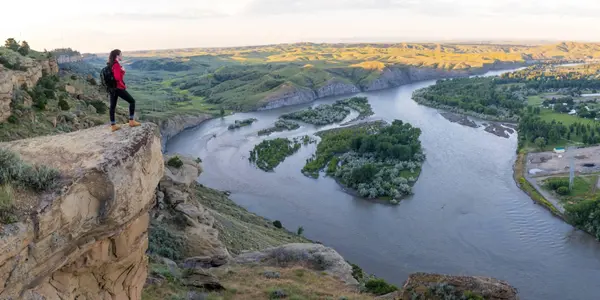
Pro: Outdoor Recreation Is Part of Everyday Life
You do not have to live in a ski town to spend time outdoors in Billings.
Within and around the city, you have access to:
-
The Rimrocks
-
Zimmerman Park
-
Swords Park
-
Yellowstone River
-
Riverfront Park
-
Pictograph Cave State Park
-
Mountain biking
-
Hiking
-
Fishing
-
Golf
-
Trail running
Then you can expand outward toward Red Lodge, the Beartooth Mountains, Bighorn Canyon, northern Wyoming, and Yellowstone National Park.
If skiing, hiking, biking, fishing, hunting, backpacking, or simply spending time outdoors matters to you, Billings can make a strong base.
You can work in a regional city during the week without completely disconnecting from Montana’s outdoor lifestyle.
Con: You Are Not Actually Living in the Mountains
This distinction matters.
Billings is surrounded by impressive landscapes, but it is not Bozeman, Red Lodge, Whitefish, or a ski resort community.
You will not walk out of your downtown home and be at a ski lift five minutes later.
The Rimrocks define much of the local landscape, and the Yellowstone River runs through the area, but the high mountains require a drive.
If the entire reason you are moving to Montana is to live directly in an alpine mountain town, Billings may not satisfy that expectation.
If you would rather have a larger employment base, healthcare, airport, shopping, and services while still being able to reach the mountains, that same tradeoff may work in your favor.
Pro: Billings Has an Airport That Makes Relocation and Travel Easier
Billings Logan International Airport is a major advantage for a city this size.
Current year-round nonstop destinations include:
-
Denver
-
Dallas
-
Minneapolis
-
Salt Lake City
-
Seattle
-
Las Vegas
-
Phoenix-Mesa
Chicago service is offered seasonally.
Those hub connections can get you to destinations across the country.
And compared with driving several hours to reach a commercial airport, having one directly in Billings makes business and personal travel much easier.
Con: Frequent Travelers May Miss Big-City Flight Options
The airport is useful, but it is not Denver International Airport.
You will need a connection for many destinations.
If you fly several times per month, frequently travel internationally, or regularly visit a city without nonstop Billings service, those extra connections can become noticeable.
Before relocating, look at the routes you actually fly.
Do not just ask whether Billings has an airport.
Ask whether that airport works for your travel patterns.
Pro: Everyday Costs Are Fairly Reasonable Overall
Billings' cost of living is currently estimated at approximately 3.1% below the national average.
Housing costs are about 8.4% lower, and utilities about 17.6% lower than national averages according to current Apartments.com/C2ER data.
That can help your overall budget.
And because Billings offers major retail, healthcare, groceries, restaurants, and services locally, you are not necessarily making long trips for every basic need like you might in a smaller Montana community.
Con: Not Everything Is Cheaper
The same cost-of-living data shows groceries roughly 2.8% above the national average and transportation about 5.1% higher.
That is why broad statements such as “Montana is cheap” are not very useful.
You may save money on one expense while paying more for another.
And vehicle ownership matters.
If you want an SUV or truck, drive frequently for recreation, travel long distances around Montana, or commute from acreage outside Billings, transportation can become a meaningful expense.
Pro: You Get More Housing Variety Than Many Smaller Montana Communities
Billings has housing from many different eras and price ranges.
That matters if you want choices.
You might prefer:
-
An older home near central Billings
-
A larger West End property
-
A newer Shiloh-area home
-
A Heights property
-
A condominium
-
A duplex
-
A new build
-
Acreage outside town
There is no single “Billings house.”
The benefit is that you can often choose between very different lifestyles without leaving the broader Billings area.
Con: Older Housing Requires Due Diligence
Housing variety also means housing condition varies.
Depending on the age and history of a property, you may need to evaluate:
-
Sewer lines
-
Roofs
-
Foundations
-
Electrical systems
-
Plumbing
-
Furnaces
-
Air-conditioning systems
-
Windows
-
Drainage
-
Insulation
-
Radon
-
Previous remodeling
That does not make older homes bad investments.
But cosmetic renovations should not distract you from the expensive systems underneath them.
A good inspection and appropriate specialist evaluations matter.
Pro: Billings Can Work Well as a Regional Base
One of Billings' strongest advantages is its position as a hub for south-central Montana.
You can live in a city with healthcare, employment, shopping, an airport, and housing choices while still using weekends to explore a huge surrounding region.
Red Lodge, the Beartooth Highway, Bighorn Canyon, Cody, and many public-land recreation areas are accessible from Billings.
For someone who wants both practicality and outdoor access, that can be difficult to replicate.
Con: Montana Distances Are Real
The tradeoff is driving.
Montana is huge.
A destination can look close on a map and still require a couple of hours behind the wheel.
If your ideal weekend involves exploring different mountain ranges, ski areas, fishing locations, national parks, or small towns, you should expect road trips.
Some people love that.
Others quickly discover that they wanted the mountains closer to their front door.
Pro: Billings Is Growing
Billings' estimated population increased from a 2020 estimate base of 117,147 to approximately 121,239 in 2025.
Growth can create:
-
More housing
-
New businesses
-
Restaurants
-
Retail
-
Infrastructure
-
Employment opportunities
-
Community investment
West Billings in particular continues to see residential and commercial development.
If you are planning to own a home for years, understanding where growth is happening can help you evaluate the location more intelligently.
Con: Growth Can Change What Is Around Your Home
Development is not automatically positive for every homeowner.
Open land can become subdivisions.
Roads can become busier.
Construction can last years.
Commercial development can appear where there was previously open space.
If you are buying because you love an undeveloped view or quiet edge-of-town setting, investigate surrounding land before making assumptions about the future.
Ask about zoning, planned development, road projects, and neighboring parcels.
Who Is Billings Probably a Good Fit For?
Billings may be worth moving to if you:
-
Want to live in Montana without living in a small town
-
Want relatively manageable housing costs by Montana standards
-
Value outdoor recreation
-
Prefer shorter city drives
-
Want access to major healthcare and shopping
-
Appreciate having a commercial airport nearby
-
Want several different housing styles and locations to choose from
-
Are comfortable driving
-
Can handle real winters and changing weather
-
Do not need big-city nightlife every night
Who Might Not Love Billings?
You may want to think twice if you:
-
Want extensive public transportation
-
Need dozens of nonstop flight destinations
-
Want dense urban living
-
Expect mild winters
-
Want major professional sports and big-city entertainment
-
Want to live directly in an alpine mountain town
-
Strongly dislike driving
-
Expect Montana housing to be extremely inexpensive
That does not make Billings good or bad.
It makes the decision personal.
So, Is Moving to Billings, Montana Worth It?
For the right person, absolutely.
You can get Montana's largest concentration of services, a housing market with meaningful choices, relatively manageable costs, an airport, regional healthcare, and strong access to outdoor recreation.
But Billings is not perfect.
You trade mountain-town living for practicality.
You trade major-city transportation and entertainment for a smaller, more manageable city.
And you still need enough income to comfortably handle modern Montana housing costs.
The question is not whether Billings wins some national “best places to live” ranking.
The question is whether Billings gives you more of what matters to you than what you would be giving up by moving here.
That is the decision worth making.
Get a Local Perspective Before You Move
If you are seriously considering a Billings relocation, Merlin Lipin, The Real Estate Wizard, can help you understand what your budget and priorities realistically look like in the local market.
Merlin is a licensed Montana REALTOR® with Engel & Völkers and relocated to Montana himself.
His Engel & Völkers profile reports more than $6 million in residential real estate closed during 2025 and identifies relocation, residential real estate, investment properties, land, new construction, and luxury homes among his areas of experience. Zillow currently reports 15 sales in the past 12 months and 28 recorded sales overall, across a wide range of price points.
More importantly, your relocation conversation should not start with someone trying to convince you Billings is perfect.
It should start with your budget, lifestyle, priorities, timeline, and the type of property you actually want.
From there, Merlin can help you compare current Billings homes and locations based on what makes sense for you.
Contact Merlin Lipin
Merlin Lipin, REALTOR®
The Real Estate Wizard | Engel & Völkers
Billings, Montana
Phone: 406-561-1189
Email: merlin.lipin@engelvoelkers.com
Website: merlinmontanafinest.com
Professional Disclaimer
This article provides general relocation and real estate information and does not constitute legal, tax, financial, lending, insurance, investment, environmental, or other specialized professional advice.
Housing conditions, prices, transportation services, airline routes, cost-of-living data, development plans, and other information can change.
Verify information important to your decision and consult appropriately licensed professionals for advice specific to your circumstances.
Categories
Recent Posts


Advisor License ID: RRE-RBS-LIC-118558
+1(406) 561-1189 | merlin.lipin@engelvoelkers.com