
Is Billings, Montana Affordable? Merlin Lipin Breaks Down Housing and Everyday Costs

Is Billings, Montana Affordable? Merlin Lipin Breaks Down Housing and Everyday Costs
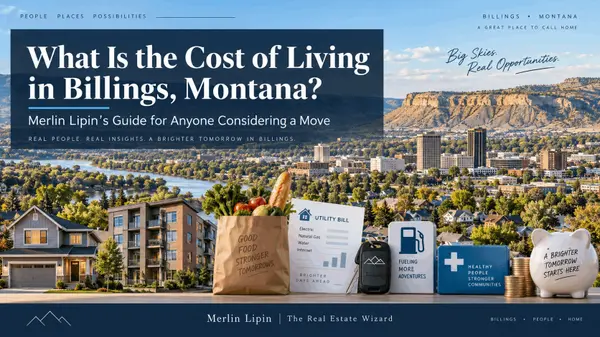
Is Billings, Montana affordable?
Compared with many U.S. cities and several higher-priced Montana markets, Billings can still offer relatively affordable housing and everyday living costs. But affordability depends heavily on your income, household size, housing choice, debt, and lifestyle. A relocation to Billings may feel inexpensive if you are coming from a high-cost metro, while someone moving from a smaller rural community may see it very differently.
The better question is not simply, “Is Billings cheap?”
It is:
Can you comfortably afford the lifestyle and housing you want in Billings?
Here is how the numbers look in 2026.
How Affordable Is Billings Compared With the U.S.?
Current cost-of-living data places Billings slightly below the national average overall.
Apartments.com, using data from the Council for Community and Economic Research's Cost of Living Index, estimates that living expenses in Billings are approximately 3.1% below the U.S. average.
But that overall number hides some important differences.
Housing and utilities tend to compare favorably with national averages, while groceries and transportation can be somewhat more expensive.
Current estimates place:
-
Housing about 8.2% below the national average
-
Utilities about 18.3% below
-
Groceries about 3.3% above
-
Transportation about 5.2% above
So moving to Billings does not automatically mean every monthly expense becomes cheaper.
Your housing may cost less while other expenses stay similar or increase.
That is why you should compare your entire budget, not just home prices.
Is Housing Affordable in Billings?
Housing is usually the biggest factor in determining whether Billings feels affordable.
Redfin reported a median Billings home sale price of approximately $389,642 in August 2026, up about 0.5% from the previous year. Homes were taking a median of approximately 61 days to sell.
That price is significant, but context matters.
The statewide Montana median sale price during August was approximately $522,823.
That puts Billings' median home price roughly $133,000 below the statewide median.
It does not mean every home in Billings is affordable or that every buyer should purchase a $390,000 house.
It does show why Billings can attract people who want to live in Montana without paying prices associated with some of the state's more expensive housing markets.
What Can You Buy in Billings?
The Billings real estate market offers a relatively broad mix of housing.
Depending on your budget, you can find:
-
Smaller established homes
-
Condos and townhomes
-
Mid-century properties
-
New construction
-
Larger suburban homes
-
Duplexes and investment properties
-
Homes with shops or oversized garages
-
Acreage outside city limits
-
Luxury properties
Different parts of Billings also offer different housing characteristics.
The West End and Shiloh areas include significant newer development.
The Heights includes both established neighborhoods and newer construction.
North Elevation and Midtown contain older homes that can offer character and convenient access to central Billings.
And once you move outside city limits toward areas such as Laurel, Shepherd, Huntley, or rural Yellowstone County, acreage and property characteristics can change substantially.
The right comparison is not simply which neighborhood is “cheapest.”
You should compare the home, condition, lot, location, commute, property taxes, insurance, maintenance, and future expenses against what matters to you.
Is Renting Affordable in Billings?
Renting may be an attractive option if you want to learn Billings before buying.
Zillow reported an average rent of approximately $1,478 per month across all property types and bedroom counts as of September 19, 2026.
That was $22 per month lower than a year earlier.
Zillow also reported Billings rents about 26% below its national rental average.
Apartments.com provides a more detailed breakdown.
As of September 2026, average apartment rents were approximately:
-
Studio: $1,048
-
One bedroom: $1,274
-
Two bedrooms: $1,478
-
Three bedrooms: $2,031
Apartment rents were about 0.7% lower than one year earlier.
Those averages are useful, but your actual rent can vary considerably.
A basic one-bedroom apartment will not cost the same as a newer townhome or a detached single-family house on the West End.
If you are relocating to Billings, search for the type of property you would realistically live in rather than relying on one citywide average.
How Much Income Do You Need in Billings?
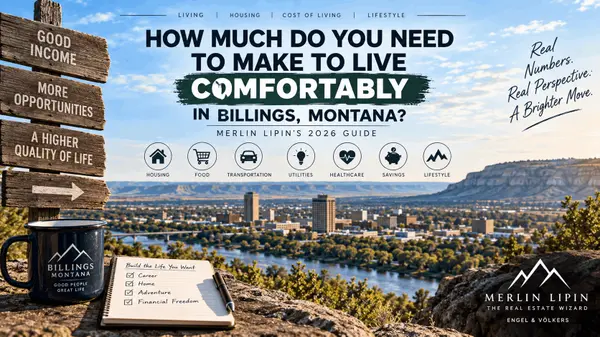
MIT's 2026 Living Wage Calculator estimates that a single adult with no children in the Billings metro needs to earn approximately $23.27 per hour to cover modeled basic living expenses.
That equals roughly $48,400 per year before taxes for a full-time worker.
Interestingly, MIT estimates the statewide Montana living wage for the same one-adult household at about $24.23 per hour, slightly higher than the Billings metro estimate.
But a living wage is not the same as a comfortable lifestyle.
That figure is designed around necessities.
It does not necessarily provide the level of discretionary income you may want for:
-
Retirement investing
-
Vacations
-
Restaurants
-
Ski trips
-
Golf
-
Camping
-
Home improvement projects
-
Emergency savings
-
A newer vehicle
-
Larger housing
-
Significant entertainment spending
For a single person without children, an income closer to $60,000–$75,000 may provide more flexibility depending on rent, debt, vehicle costs, and lifestyle.
That is a practical guideline rather than an official affordability standard.
Families Need a Different Affordability Calculation
Billings can feel dramatically different financially once children enter the equation.
MIT estimates that a single adult with one child in the Billings metro needs approximately $42.80 per hour to cover modeled basic expenses.
For one adult with two children, that estimate rises to approximately $56.44 per hour.
Childcare is a major reason.
In Yellowstone County, MIT estimates childcare costs of approximately $14,180 annually for one child in a two-working-adult household.
With two children, modeled childcare expenses rise above $26,000 annually.
That is why saying “Billings is affordable” without knowing the household is misleading.
Affordability is personal.
A couple without children earning $100,000 may have substantial financial flexibility.
A household earning the same amount while paying for childcare, multiple vehicles, a mortgage, and other debt may experience Billings very differently.
What About Groceries?
Food is one area where Billings is not necessarily cheaper than the national average.
Current cost-of-living estimates place groceries roughly 3.3% above the U.S. average.
MIT estimates annual food expenses of approximately $4,265 for one adult in Yellowstone County.
That is roughly $355 per month under MIT's basic-needs model.
Your actual spending may be considerably higher.
If you regularly eat out, buy premium groceries, have multiple children, or entertain frequently, food can become a much larger part of your budget.
Billings has major grocery chains, local markets, warehouse-style shopping, restaurants, coffee shops, breweries, and other options.
You have choices, but Montana geography does not automatically translate into unusually cheap groceries.
What About Utilities?
Utilities are one area where Billings currently compares favorably with national averages.
Current Cost of Living Index data puts Billings utilities approximately 18.3% below the U.S. average.
But the house itself matters far more than the citywide number.
A well-insulated newer home may have very different heating expenses from a larger older property with original windows.
When buying a home in Billings, look at:
-
Furnace age
-
Air-conditioning system
-
Windows
-
Insulation
-
Square footage
-
Natural gas versus electric systems
-
Irrigation
-
Lawn size
Montana winters and hot summer periods mean heating and cooling can matter.
If utility costs are a concern, ask whether historical bills for a specific property are available.
Transportation Can Offset Some of the Savings
Billings is relatively easy to navigate compared with a major metro.
The city's average commute is short, and you can generally reach most parts of town without spending hours in traffic.
But Billings is also fairly car-dependent for many residents.
Your transportation budget may include:
-
Car payment
-
Fuel
-
Insurance
-
Registration
-
Maintenance
-
Tires
-
Winter driving equipment
Current cost-of-living estimates put transportation costs around 5.2% above the national average.
MIT estimates roughly $9,200 annually in transportation expenses for a single adult in Yellowstone County.
So although your commute may be shorter, owning and maintaining a vehicle remains an important part of your Billings budget.
Is Billings Cheap Compared With Other Montana Cities?
“Cheap” is probably the wrong word.
Relatively affordable is more accurate.
Billings' median sale price of about $390,000 is well below Montana's statewide median of approximately $523,000.
That gives Billings a meaningful housing advantage compared with the statewide benchmark.
But Montana housing markets vary enormously.
Bozeman, Whitefish, Missoula, Helena, Great Falls, Red Lodge, and rural communities each have different prices, employment bases, inventory, and lifestyles.
Billings also offers amenities that many smaller communities do not, including:
-
Major regional healthcare
-
Billings Logan International Airport
-
Larger retail selection
-
Restaurants and breweries
-
MetraPark
-
ZooMontana
-
Yellowstone Art Museum
-
College and university options
-
Extensive regional employment
You are not simply comparing the price of the house.
You are comparing what you get access to by living there.
Can First-Time Buyers Still Afford Billings?
For some buyers, yes.
But you should not assume affordability simply because Billings is less expensive than Montana overall.
Your buying power depends on:
-
Income
-
Current interest rates
-
Monthly debt
-
Credit profile
-
Down payment
-
Property taxes
-
Homeowners insurance
-
Loan program
The monthly payment matters more than the listing price alone.
A $350,000 house at one interest rate can have a very different monthly payment from the same house at another rate.
And qualifying for a mortgage does not automatically mean you should spend the maximum amount a lender approves.
A good housing budget should still leave you room for savings, maintenance, travel, emergencies, and the rest of your life.
Does Billings Offer Good Value?
This is where Billings can make a stronger argument.
Affordability and value are not exactly the same thing.
Billings gives you access to the amenities of Montana's largest city while maintaining a median home price well below the statewide figure.
You also have outdoor recreation close to town.
The Rimrocks, Yellowstone River, Zimmerman Park, Swords Park, Pictograph Cave State Park, and broader south-central Montana recreation are all accessible without living in one of Montana's high-priced resort markets.
For someone who wants a balance of city services, outdoor access, housing choices, and Montana lifestyle, that combination may represent good value.
But that does not mean Billings will be affordable for every household.
How Should You Decide Whether Billings Is Affordable for You?
Do not start with an online article that says Billings is 3% cheaper than average and assume the move works.
Build your own budget.
Compare:
-
Your expected Billings rent or mortgage
-
Property taxes and insurance
-
Utilities
-
Groceries
-
Vehicle expenses
-
Healthcare
-
Childcare
-
Debt payments
-
Savings goals
-
Recreation and travel
Then compare that total with both your income and what you currently spend.
That gives you a much more useful answer than a national affordability ranking.
Planning a Move to Billings?
If you are considering a relocation to Billings, housing will probably be the largest variable in your budget.
Merlin Lipin, The Real Estate Wizard, is a licensed Montana REALTOR® with Engel & Völkers who works with buyers, sellers, investors, and relocation clients throughout Billings and surrounding Montana communities.
Merlin relocated to Montana himself, giving him firsthand experience with many of the same questions people ask before making the move.
His specialties include residential real estate, relocation, investment properties, new construction, land, and luxury homes.
Zillow currently reports 16 sales during the past 12 months and 27 recorded sales overall, with recent transactions representing both buyers and sellers in the Billings market. Public reviews frequently mention communication, responsiveness, professionalism, and local market knowledge.
If you want to know what your budget can realistically buy in Billings, Merlin can help you compare current homes, property types, locations, and market conditions based on your actual goals.
Contact Merlin Lipin
Merlin Lipin, REALTOR®
The Real Estate Wizard | Engel & Völkers
Billings, Montana
Phone: 406-561-1189
Email: merlin.lipin@engelvoelkers.com
Website: merlinmontanafinest.com
Meta Description
Is Billings, Montana affordable? Compare 2026 home prices, rent, income and everyday costs with local real estate insight from Merlin Lipin.
Categories
Recent Posts


Advisor License ID: RRE-RBS-LIC-118558
+1(406) 561-1189 | merlin.lipin@engelvoelkers.com