
Is Billings, Montana a Good Place to Live? Merlin Lipin’s 2026 Relocation Guide

Is Billings, Montana a good place to live?
For many people, yes. Billings offers the services of Montana’s largest city, relatively short commute times, access to outdoor recreation, and a housing market with more variety than many smaller Montana communities. But whether Billings is right for your relocation depends on your budget, work, lifestyle, and expectations.
If you are considering a relocation to Billings, Montana, the most useful approach is to look beyond generic “best places to live” rankings and understand what daily life, housing, neighborhoods, weather, and the local real estate market actually look like.
What Is It Like Living in Billings, Montana?
Billings is Montana’s largest city and serves as a major hub for healthcare, retail, employment, education, and transportation throughout south-central Montana.
That matters when you are relocating because you get many of the conveniences of a larger regional city while still being close to open space, trails, rivers, and mountain recreation.
Here are a few things you may notice quickly after moving to Billings.
1. Outdoor recreation is close to everyday life
You do not need to drive hours every time you want to get outside.
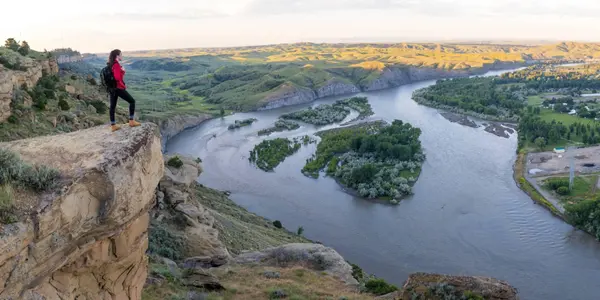
You can walk or bike near the Rimrocks, use riverfront parks, visit Pictograph Cave State Park, or make Billings your base for drives toward the Beartooth Highway.
Visit Billings highlights Zimmerman Park, Swords Rimrock Park, the Yellowstone River, Pictograph Cave State Park, ZooMontana, and downtown attractions as some of the area’s popular destinations.
2. Your day-to-day drive is usually measured in minutes, not hours
The U.S. Census Bureau reports a mean travel time to work of about 16.5 minutes for Billings workers.
Winter weather, construction, and the exact part of town you live in can change that. But if you are relocating from a larger metro area, the scale of Billings can feel noticeably different.
3. You have several distinct parts of town to compare
Billings is not one uniform housing market.
The West End, Heights, Downtown, Midtown, Shiloh, North Elevation, and South Billings all offer different street patterns, housing ages, lot sizes, and access points.
The City of Billings’ 2026 West Billings Neighborhood Plan reports that the plan area has more than doubled in population and more than tripled its dwelling count since 2001.
That growth is one reason west Billings continues to be an important part of the local housing market.
How to Think About Billings Neighborhoods Without Chasing a “Best” List
When you search for the “best neighborhoods in Billings,” you will find plenty of rankings.
A better approach is to define what matters to you and compare objective property and location factors.
That keeps your decision practical and helps you avoid relying on broad assumptions about who should live in a particular area.
West End / West Billings
West Billings is one of the city’s major growth areas, particularly west of 24th Street.
You will find continued residential and commercial development throughout this part of Billings.
The City’s current planning efforts focus on infrastructure, future growth, and improved walking and biking connections.
Billings Heights
The Billings Heights sits north of the Rimrocks and includes a mix of established residential areas and newer development.
You also have access to several parks in and around the Heights, including Castle Rock Park and nearby Lake Elmo State Park.
Downtown / North Elevation
This area may be worth comparing if you value proximity to downtown employment, restaurants, cultural venues, or Billings’ medical corridor.
Housing styles and lot patterns here can be very different from newer developments on the West End.
Midtown / West Central
Central Billings can give you relatively convenient access to several parts of the city.
Homes vary significantly in age, condition, updates, and lot size, so property-by-property due diligence matters.
Shiloh / Far West End
This area is worth considering if newer development, west-side retail, and access to Billings’ western growth corridors are important to you.
The right area depends on what you want your daily routine to look like.
Fair housing note: A real estate professional should help you evaluate homes and neighborhoods using your stated, objective criteria. They should not steer you toward or away from an area based on protected characteristics. For schools, crime statistics, taxes, zoning, or similar topics, use the appropriate public agency or independent data source and make your own comparison.
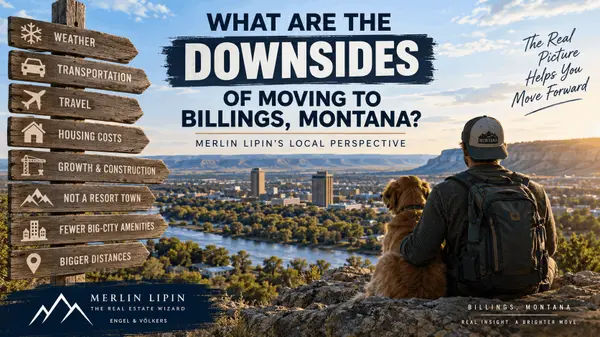
What Are the Tradeoffs of Living in Billings?
A relocation guide is not very useful if it only tells you why a city is great.
Billings has tradeoffs, and you should decide whether they fit what you want.
Montana weather is part of daily life. You should be comfortable with winter driving, snow, cold snaps, wind, and major seasonal temperature swings.
Billings is also still a car-oriented city for many residents. A short commute does not automatically mean you can comfortably live without a vehicle.
The city continues to grow westward. That creates new housing and commercial opportunities, but it also means construction, infrastructure changes, and different levels of development depending on where you live.
Housing condition can also vary sharply even within the same price range.
Older homes may require more attention during inspections. Newer homes may come with different lot sizes, HOA requirements, or development restrictions.
And if your idea of moving to Montana means living directly in a ski town or mountain resort, Billings is probably not what you are picturing.
Its strength is being a regional city and a practical base for south-central Montana, rather than trying to be Bozeman, Whitefish, or Red Lodge.
What Is the Billings Real Estate Market Like in 2026?
The 2026 Billings real estate market gives buyers more room to compare than the extremely tight conditions many people remember from earlier in the decade.
Realtor.com reported approximately 1,305 active listings in June 2026, a median sold price of about $391,902, and a median 42 days on market.
Redfin reported a similar median sale price of approximately $389,238, representing about a 3% year-over-year increase.
That does not mean every buyer automatically has leverage or every seller is struggling.
The more useful takeaway is that each property needs to be evaluated individually.
Homes that are priced appropriately and show well can still attract strong interest.
Properties with condition issues, aggressive pricing, or limited buyer appeal may take longer.
If you are selling a home in Billings because you are relocating somewhere else, the same market data matters in reverse.
Your timeline should account for realistic market exposure, inspections, possible repairs, financing, closing logistics, and the timing of your next move.
You should not assume your property will automatically sell the first weekend.
Is Billings a Good Fit for Your Relocation?
Billings may be worth serious consideration if several of these describe what you want:
-
You want a Montana city with a population of more than 120,000 rather than a small town.
-
You care about access to healthcare, shopping, restaurants, and regional services.
-
You want outdoor access without making a resort community your everyday home base.
-
You value relatively short average commute times.
-
You want several different housing areas and property types to compare.
-
You are comfortable with four-season weather and driving as part of daily life.
Billings may be a weaker fit if you want dense public transportation, major-city nightlife, mild winters year-round, or walk-to-the-lift mountain-town living.
The real question is whether Billings matches how you actually want to live.
A Practical Billings Relocation Checklist
Before committing to a move, work through these steps:
-
Visit or rent first if you are still unsure how the city feels in person.
-
Choose your housing budget before you become attached to a specific property or area.
-
Compare commute routes at the times you would actually drive them.
-
Review several parts of Billings based on objective factors such as home style, lot size, proximity to work, parks, services, and your preferred routine.
-
Get fully pre-approved before treating an online listing price as your true budget.
-
Budget for inspections, insurance, utilities, maintenance, and moving expenses in addition to your down payment.
-
If you must sell another property first, plan the sale and purchase timelines together.
-
Use qualified professionals for legal, tax, lending, insurance, inspection, and accounting questions that fall outside your real estate agent’s role.
Why Work With Merlin Lipin on a Billings Relocation?
You do not need a real estate agent who simply tells you Billings is great.
You need someone who can help you compare properties against your actual goals, explain the tradeoffs, and tell you when a house may not make sense for you.
Merlin Lipin, The Real Estate Wizard, is a licensed Montana REALTOR® with the Morales Group at Engel & Völkers.
His Engel & Völkers profile states that he personally closed more than $6 million in residential real estate in 2025 and relocated to Montana himself.
Zillow lists relocation, investment properties, new construction, and residential buyer and seller representation among his specialties.
Public reviews on Realtor.com and other platforms frequently mention responsiveness, professionalism, communication, and local market knowledge.
That experience can be especially helpful if you are moving from another state or coordinating both a sale and a purchase.
You can use local market data, virtual showings when appropriate, property-specific analysis, inspection coordination, and a clear transaction timeline instead of trying to piece your move together from listing portals alone.
So, Is Billings, Montana a Good Place to Live?
For many people, yes.
Billings gives you the scale and services of Montana’s largest city, a housing market with meaningful choices, relatively short average commute times, and close access to the Rimrocks, Yellowstone River, parks, trails, and the wider south-central Montana landscape.
But the right move depends on your budget, work, lifestyle, property needs, and expectations.
If you are planning a Billings, Montana relocation—or selling a home in Billings before your next move—contact Merlin Lipin, The Real Estate Wizard, for a property-specific conversation.
You can compare neighborhoods, current listings, realistic pricing, and timing based on your goals rather than relying on a one-size-fits-all relocation checklist.
To grab the full relocation guide and things to do in Billings, click here:
Contact Merlin Lipin
Merlin Lipin, REALTOR®
The Real Estate Wizard | Engel & Völkers
Billings, Montana
Phone: 406-561-1189
Email: merlin.lipin@evrealestate.com
Website: merlinmontanafinest.com
Professional Disclaimer
This article provides general real estate and relocation information and is not legal, tax, accounting, financial, insurance, lending, school-ranking, or safety advice.
Market statistics change, and citywide data may not reflect a specific property.
Verify current information and consult appropriately licensed professionals for advice specific to your situation.
Categories
Recent Posts

Advisor License ID: RRE-RBS-LIC-118558
+1(406) 561-1189 | merlin.lipin@engelvoelkers.com